About me and my group
I am presently leading the simulations of compact objects group at the Center for Relativistic Astrophysics at Georgia Tech. Our collective goal is to use cutting edge numerical simulations to address challenging problems in black hole accretion. We use a combination of numerical simulations, radiative transfer calculations, and semi-analytical models to benchmark theory against observations.
I grew up in Amsterdam and completed my PhD at the University of Amsterdam in September 2019, supervised by Professor Michiel van der Klis. I then spent four years at Harvard University as a John Harvard and ITC Fellow. As a computational astrophysicist, I develop general relativistic magnetohydrodynamic (GRMHD) simulations to study how gas flows onto black holes and powers jets and outflows. My work spans X-ray binaries, active galactic nuclei, tidal disruption events, and gamma-ray bursts. I am also interested in the underlying plasma physics—from magnetic reconnection and shocks to the production of cosmic rays and neutrinos, and the synthesis of heavy elements.
Furthermore, I am the main developer of H-AMR, which is the fastest massively parallel GPU accelerated GRMHD code. H-AMR is now used by groups at Georgia Tech, Northwestern University, the University of Amsterdam, University of Toronto, Princeton and the Flatiron Institute. Feel free to contact me for collaboration and/or outreach purposes. Also check out my YouTube channel!
Research Directions

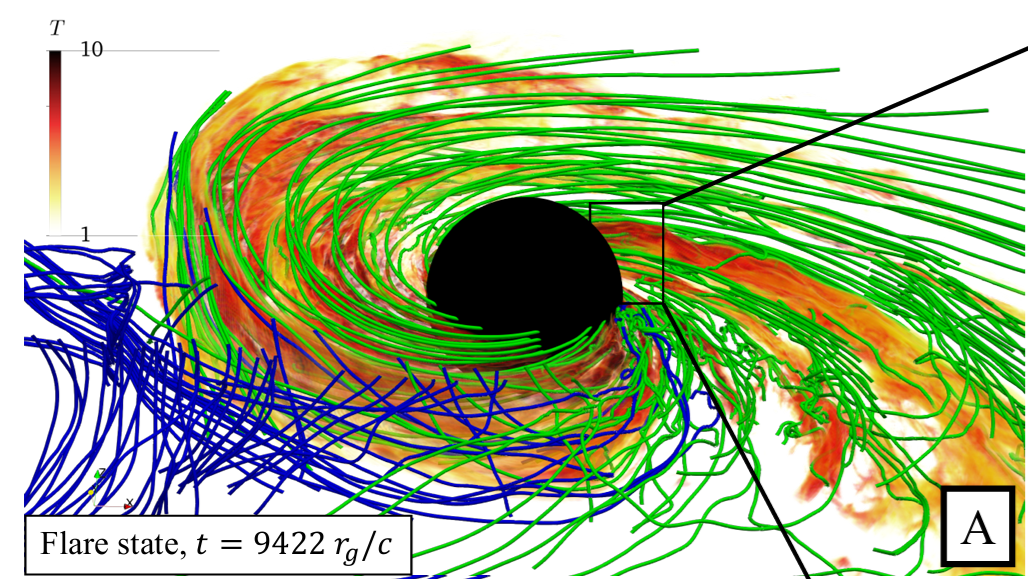

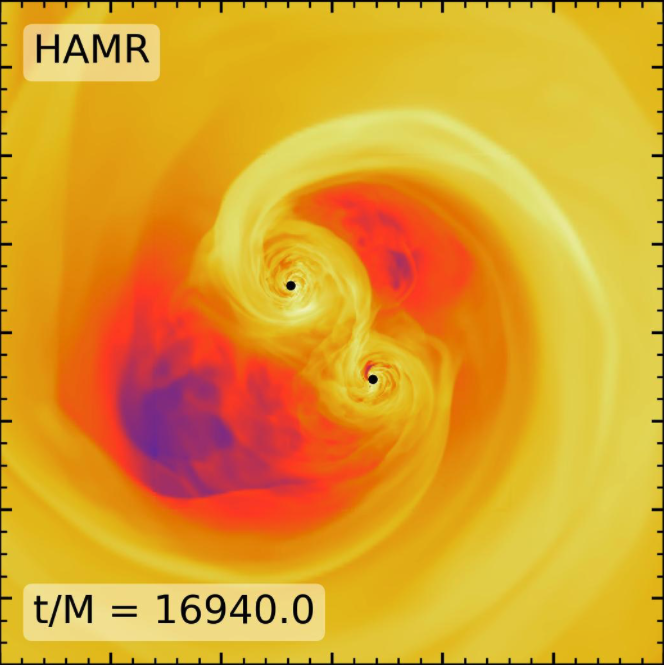
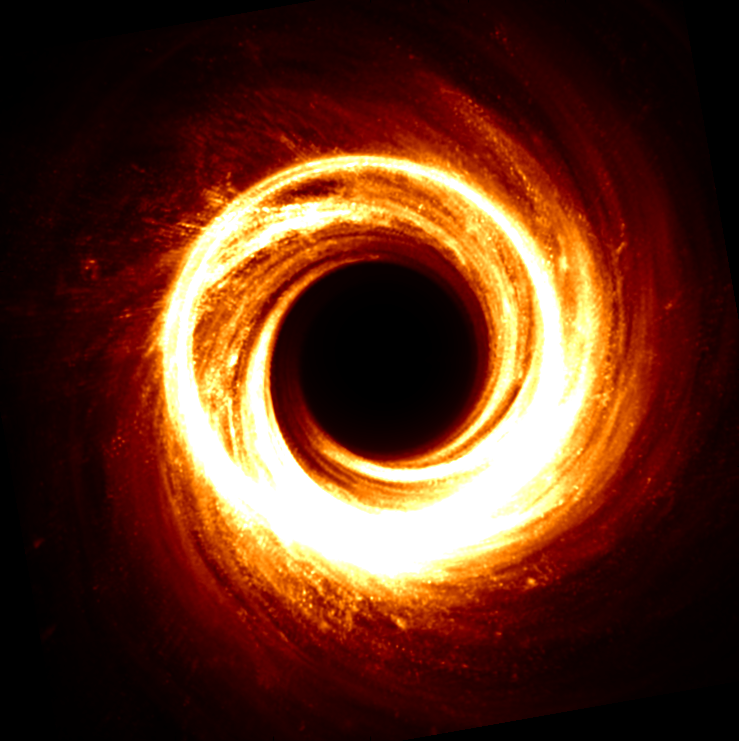
Current Group Members

Khushi Taori (Graduate Student)
Khushi uses general relativistic ray tracing to turn GRMHD simulations into synthetic light curves and spectra for black hole outbursts. She compares SANE and MAD accretion flows to determine how magnetic flux shapes state transitions and observable variability.

Grant van Gerpen (Undergraduate Student)
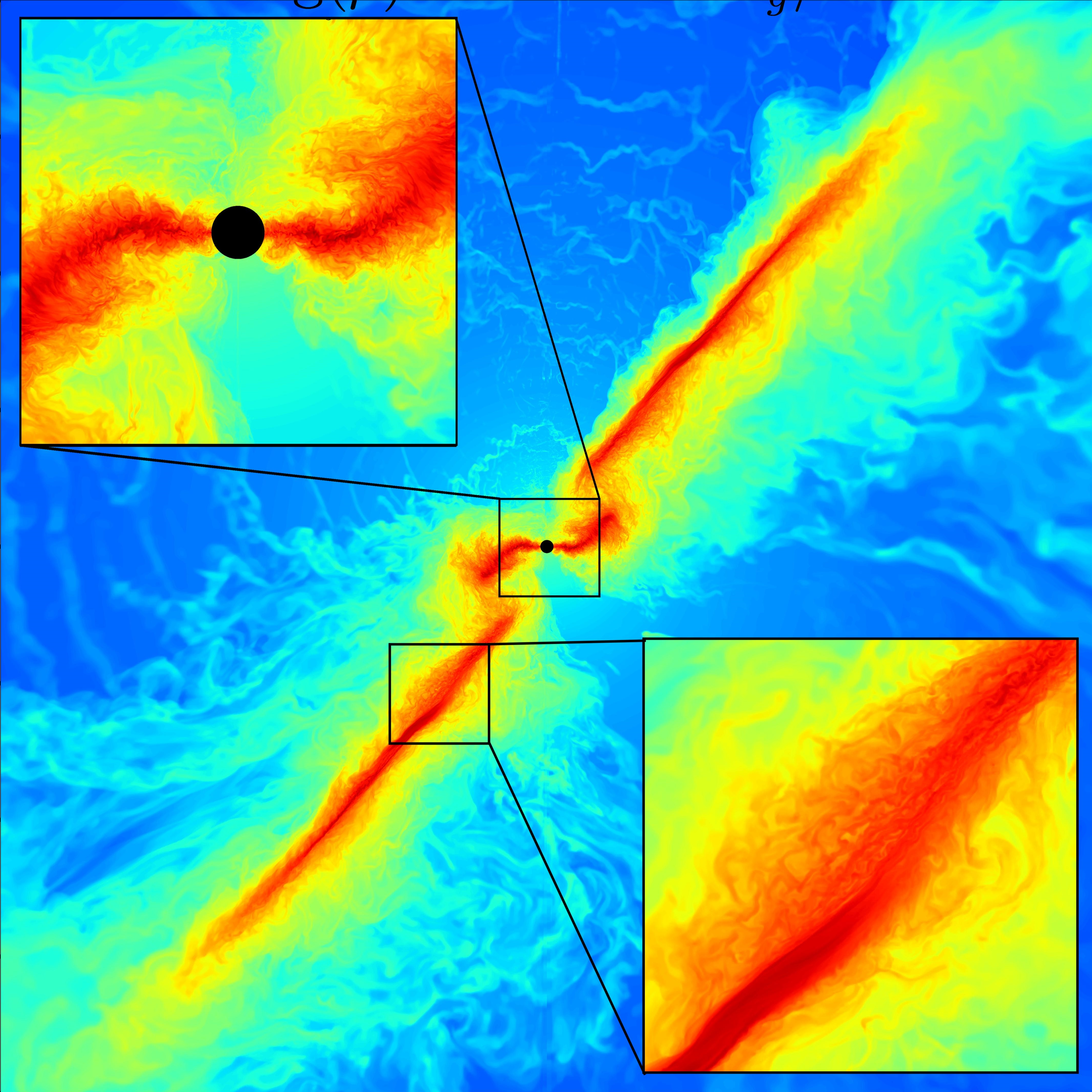
Grant studies how relativistic jets evolve from black-hole scales to the much larger scales observed in active galaxies. His work tests what physical processes drive the variability seen in the jet of M87.
Christopher Bambic (Postdoc)
Chris studies the hot, magnetized coronae that produce hard X-rays around luminous accreting black holes. Using radiative two-temperature GRMHD simulations, he investigates how vertical magnetic flux controls the corona’s size and luminosity.

Rohan Mahajani (Graduate Student)
Rohan studies gas accretion onto binary supermassive black holes. His simulations examine how orbital dynamics reshape circumbinary flows and generate electromagnetic signatures that could help identify black-hole binaries before merger.
Hobbies
I love pushing my limits in rock climbing and bouldering as much as I love pushing the field’s limit of black holes. On top of that, I am a casual runner and triathlete (casual for me at least) to keep up with the athletic pursuits of my partner in crime Constance Crozier (https://constancecrozier.github.io/).